
TRAVEL
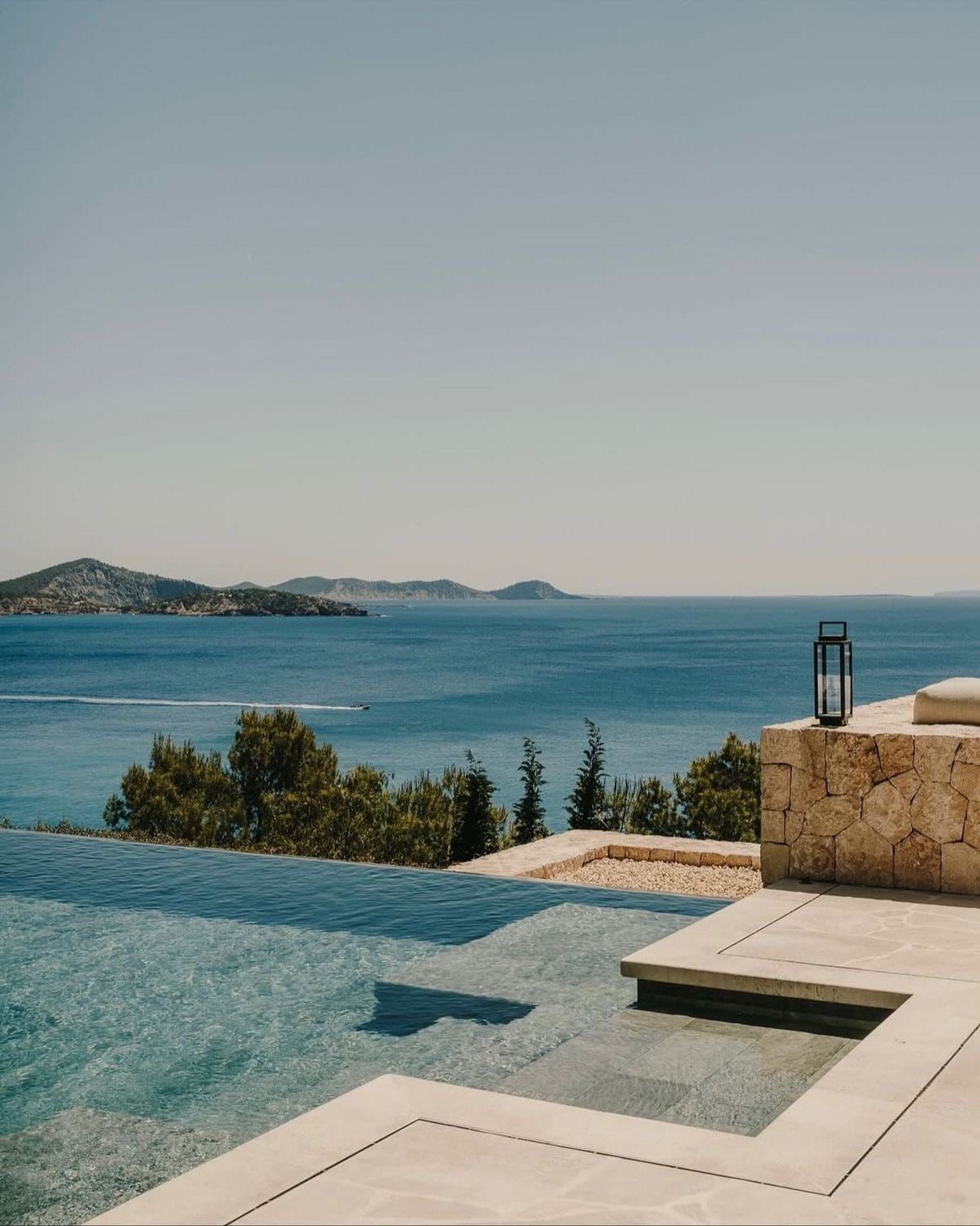
The ones in the know know that Ibiza is more than superclubs and forgetting your own name for several days. The history of the island is long and colourful with it's clubbing era being only a fraction of it, so it's perhaps unfair that it's the thing it's now most known for. As beyond the DJs and smoke machines is an island filled with art, ancient tunnels and historical stories and myths creating a magic that is that's hard to put into words and even harder to forget. They say Ibiza changes you, but perhaps it makes you see yourself for who you really are. The daily grind replaced by a more simple approach, stripping all the gloss of modern life back to dinner sitting on the rocks, the most amazing sunsets and perhaps the most important of all, community.
So we're here to show you the other side: the hidden beaches, the restaurants that aren't on any guide, and the secrets of Ibiza you'll actually want to keep to yourself.
First a little bit of that history. Ibiza is named after Bes, the Phoenician god of music and dance, so technically this island has been the party island for almost 3,000 years. Superclubs Pacha and Amnesia didn't show up until 1973 so you see what we mean about the fraction. Before any of that it traded salt across the Mediterranean since the 7th century BC, pretty much the island's only export for most of its existence. But trade didn't make it rich, though, Ibiza stayed poor and cut off from the mainland right up until the 50s. But that isolation is part of what has kept the culture intact for so long. Then in the 60s, the hippies arrived, painters, writers, photographers with no cash and a lot of ideas, and instead of the island spitting them out, it just absorbed them. Explains a lot about the place really. Their presence is still felt today with the Ibiza hippie markets being world renowned. There are several held across the island like Punta Arabí Hippy Market (Es Canar, Las Dalias Hippy Market (Sant Carles) and Paseo de s’Alamera (Santa Eulària).
WHERE TO STAY
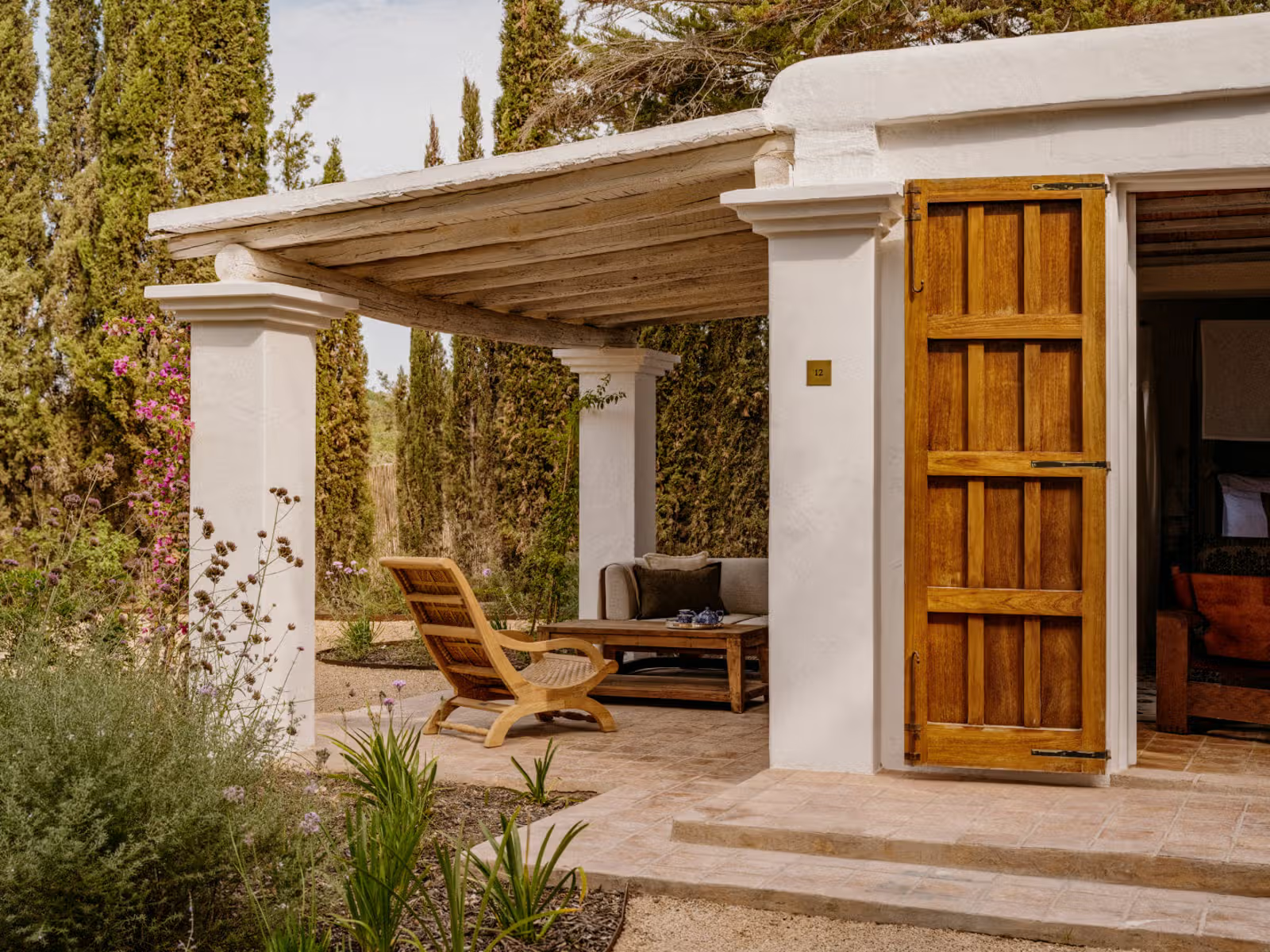
Soho Farmhouse Ibiza in Santa Gertrudis is brand new and exactly what you'd expect from the brand. Sitting inside a working olive grove with only 14 bedrooms, two villas, two pools, a health club and a restaurant on site so you never have to leave if you don't want to. Or head to the newly opened Nômade Temple in Portinatx in the north of the island. Its built around the idea that the land should be given back to nature. A jungle-grown spa carved into rocks, a recording studio for whoever's passing through and a bazaar for anyone wanting to take more than memories home. With 182 rooms and community at the heart of it, you never know who you might meet at its stargazing nights.
WHERE TO EAT
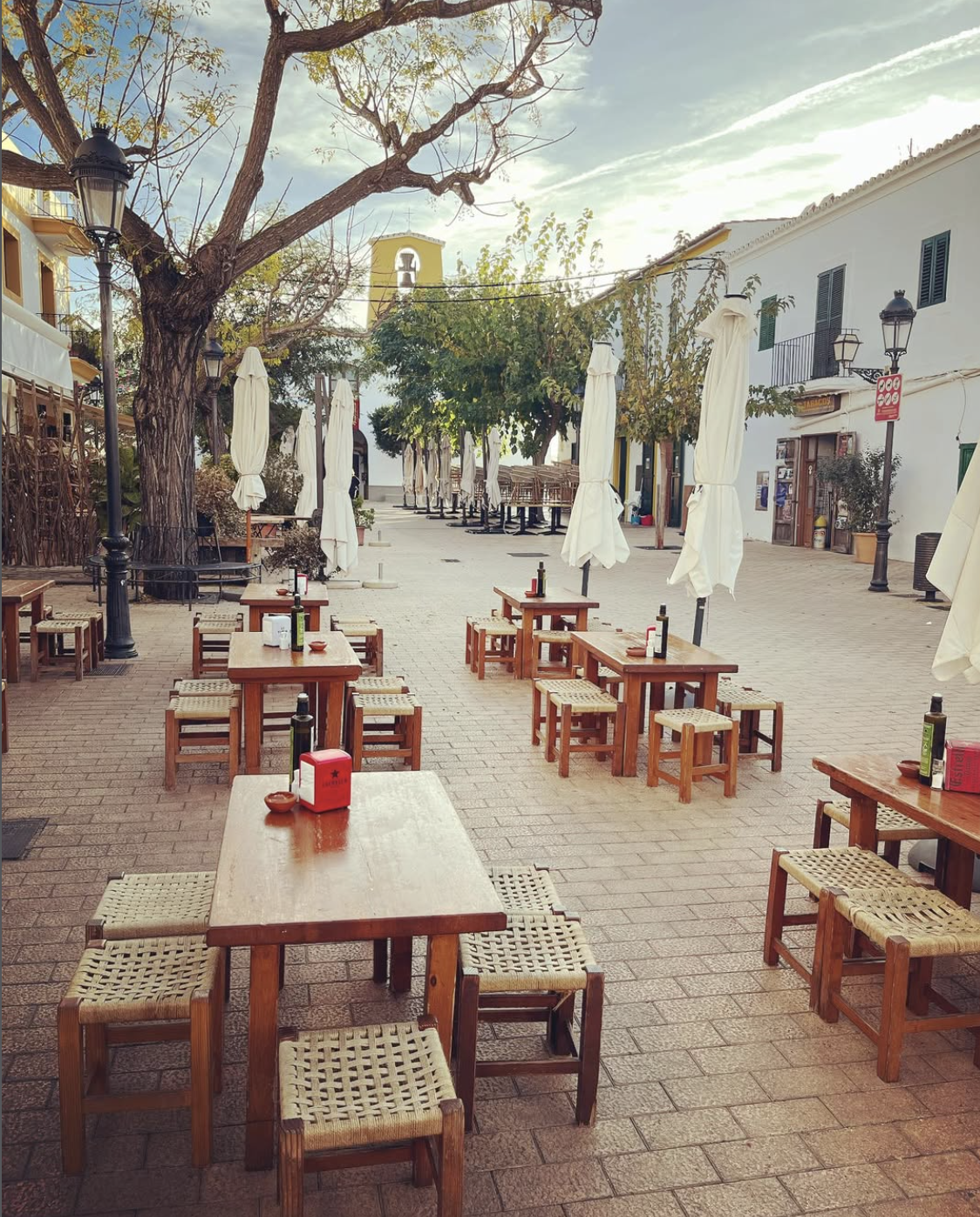
Bar Anita in San Carlos has been run by the same family since 1876. First as a grocer’s shop and small bar it was founded by Josep Noguera Rosselló and since then it has been passed down from generation to generation. Known as one of the original hippie hangouts, Bar Anita offers tapas, mixed dishes and traditional Ibicencan dishes, as well as one of the best Hierbas Ibicencas on the island.
Bar Costa in Santa Gertrudis is probably the best known sandwich bars in Ibiza standing for over 100 years. With hams hanging from the ceiling and art covering every wall (some of it from artists who paid their bill in paintings instead of cash) it used to be the “local” bar, opened only on weekends and on rainy days, when farmers didn’t work. Now open every day except Tuesdays, order the bocadillo de jamón or the bocadillo de salchichón and sit on the terrace.
Ca n'Alfredo is Eivissa old school, run by the Riera family since 1941. Its menu offers traditional Ibizan cuisine, including baked San Pedro sole, a variety of rice dishes and calamari stuffed with sobrrasada (red Majorcan sausage) and local style beans with bacon, sobrasada and black pudding. Its another of the oldest restaurants set in the heart of the city and Catalina Riera, chef and wife of Juanito Riera, approaches traditional Ibizencan food with a lighter style.
La Finca Can Suldat, Es Canar Run by a Swiss expat called Peter who's been there for decades, has his own bedroom in the middle of the restaurant (roped off, mostly), and serves Swiss food on an Ibizan finca because. Steaks, fondue, raclette, live music most nights and a homemade limoncello you'll regret and not regret in equal measure. Its filled with soft candle light, artificial flowers and a mix of boho décor including a giant wooden penis with a skull ‘n’ crossbones on it. Ibiza eclectic at its best.
Lupita's Kitchen, Cala Vadella Beachfront a tiny charming restaurant where Chef Robert recreates the lovely herby recipes that his Grandma Lupita cooked at her home. With an array of salads, currys and tomato dishes, its home cooking at its very best.
S'illot des Rencli, Portinatx has been family-run since 1983. Outdoor dining, perched on the cliffs above its own tiny cove, with beautiful views of the bay. No website and barely an Instagram profile but famous enough without either. Order the guisat de peix, it's said that its the best fish stew in Ibiza. Their ingredients are unbelievably fresh, with the menu often being decided depending on the catch that day and sitting alongside classic dishes like bullits de peix, paellas or rice a la marinara. Book ahead, this one's not as quiet a secret as you'd expect.
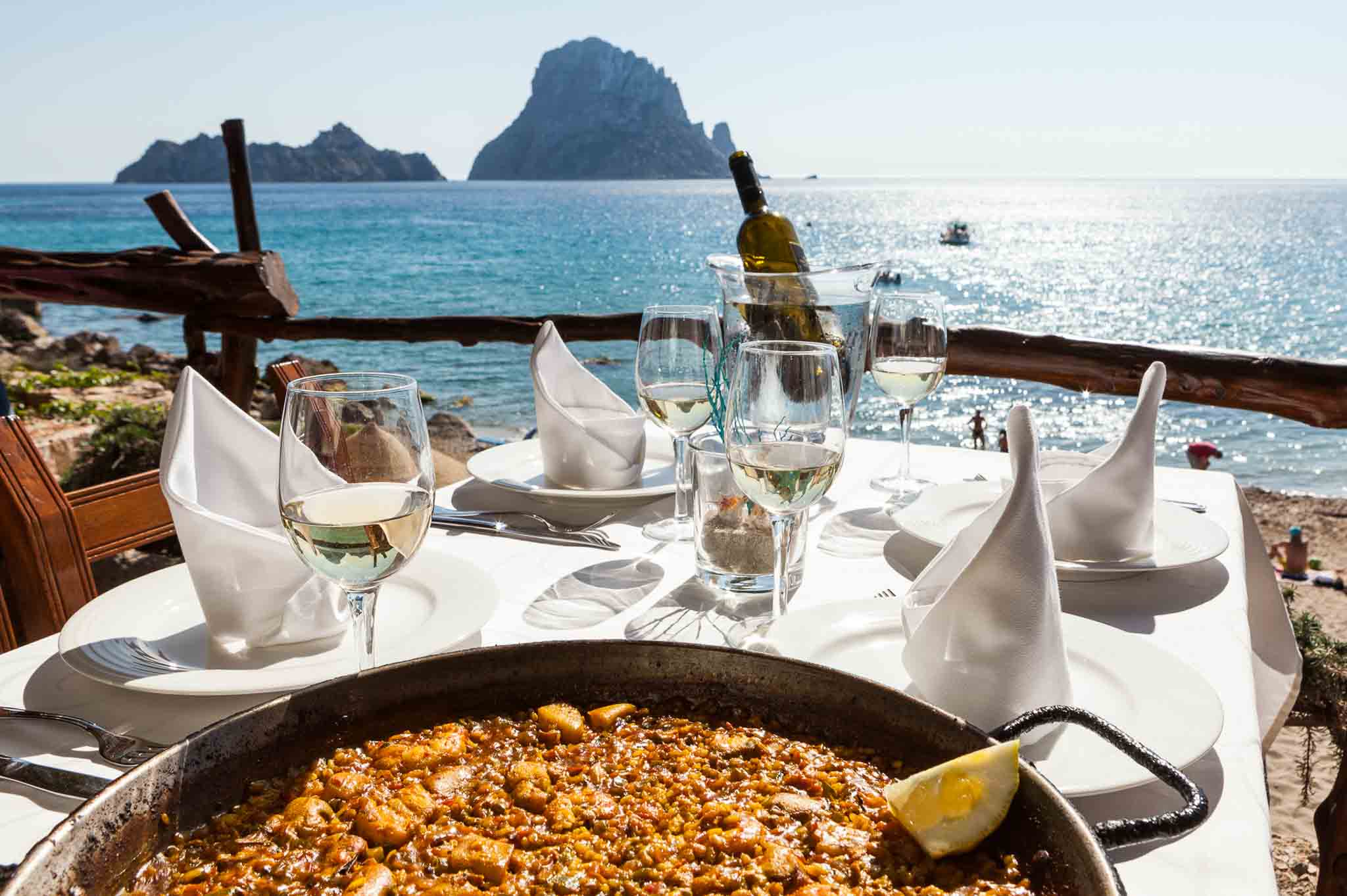
El Carmen, Cala d'Hort is another family-run spot since the 80s, with a waiting list and a booking system so you know this place isn't a secret. The food is wonderful but its the uninterrupted view of Es Vedrà that makes this one of the most popular restaurants on this list. Traditional dishes like paella or the bullit de peix with arròs a banda are mixed with the sea breeze and views of one of the most magical landmarks.
Fish Shack, Talamanca nestled on the rocks right on the waters edge is an unpretentious restaurant thats a favourite with both locals and tourists. The restaurant doesn't have a telephone number, doesn't take any table reservations and is cash only but is a must visit for a truly authentic Ibiza lunch or sunset dinner, simply cooked, fresh fish and the views across the bay of Talamanca.
WHERE TO SWIM
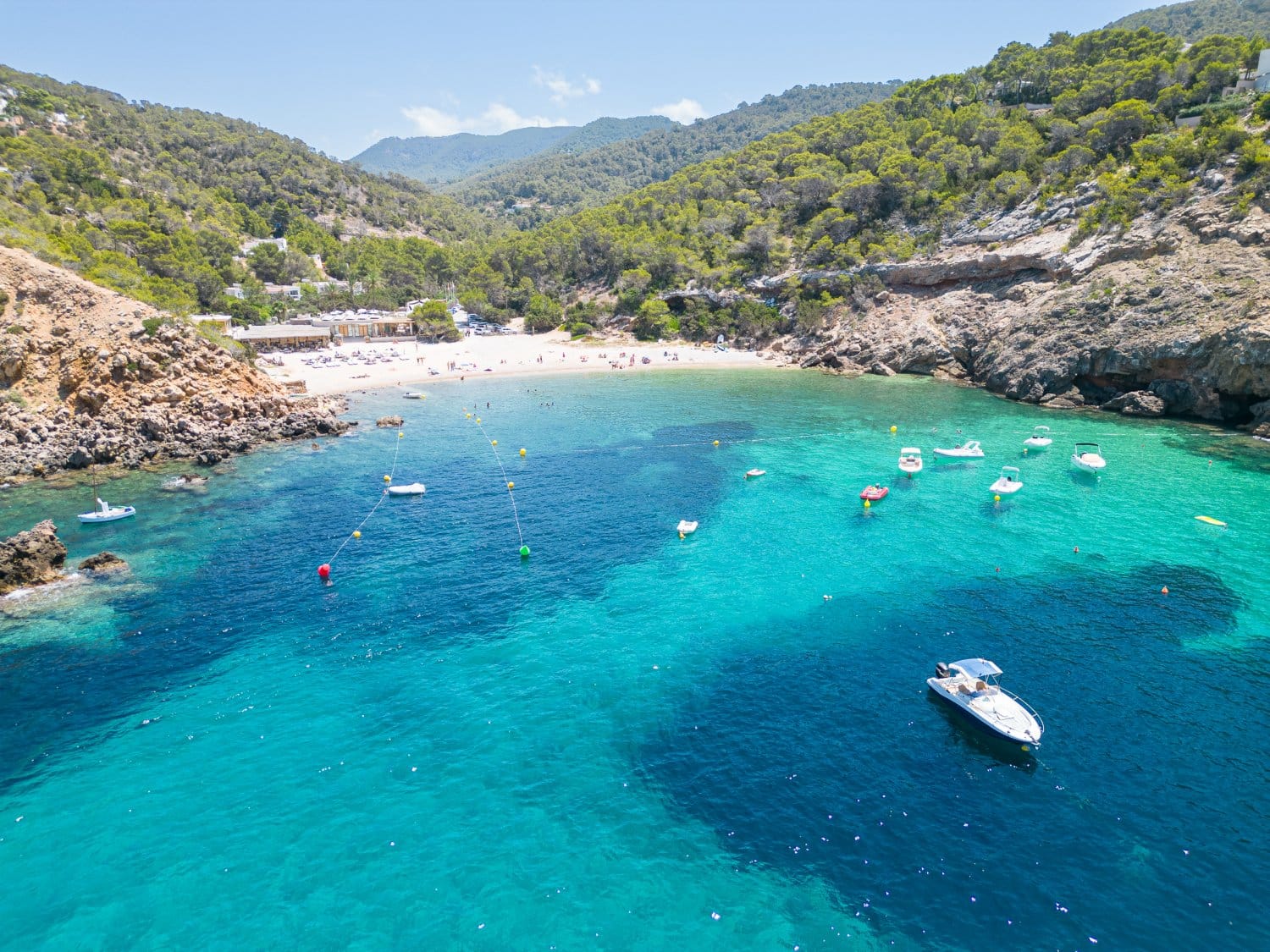
There are over 50 beaches and a coastline of 210km, so really you could visit a new beach every day for a really long time. But our recommendations are these three. Cala Gracioneta a narrow sand beach with pristine turquoise waters. Its accessible from a natural stretch of rocky walls and you can stretch out on the sun loungers available for hire and have lunch in the chiringuito. Cala Olivera, tucked into the east coast and golden, is a hidden gem often favored by locals and naturists. Its quiet and relaxed and the calm waters make it ideal for snorkeling and paddleboarding. Cala Molí, is a secluded cove set at the end of a cleft in the hillside. Its quite a pebbly beach and the sea bed is quite rocky, so it is advisable to bring some water shoes but it's an amazing beach for snorkelling as the water is beautifully clear. There is a luxury beach club if you're feeling bougie but if it's not the vibe you're after bring your own food and drinks as there are no chiringuito here.
If those three aren't quiet enough for you, Es Portitxol and Cala Xuclar don't even make it onto the first page of Google and they're so isolated that there's no beach club charging you €22 for a lounger.
WHERE TO EXPLORE
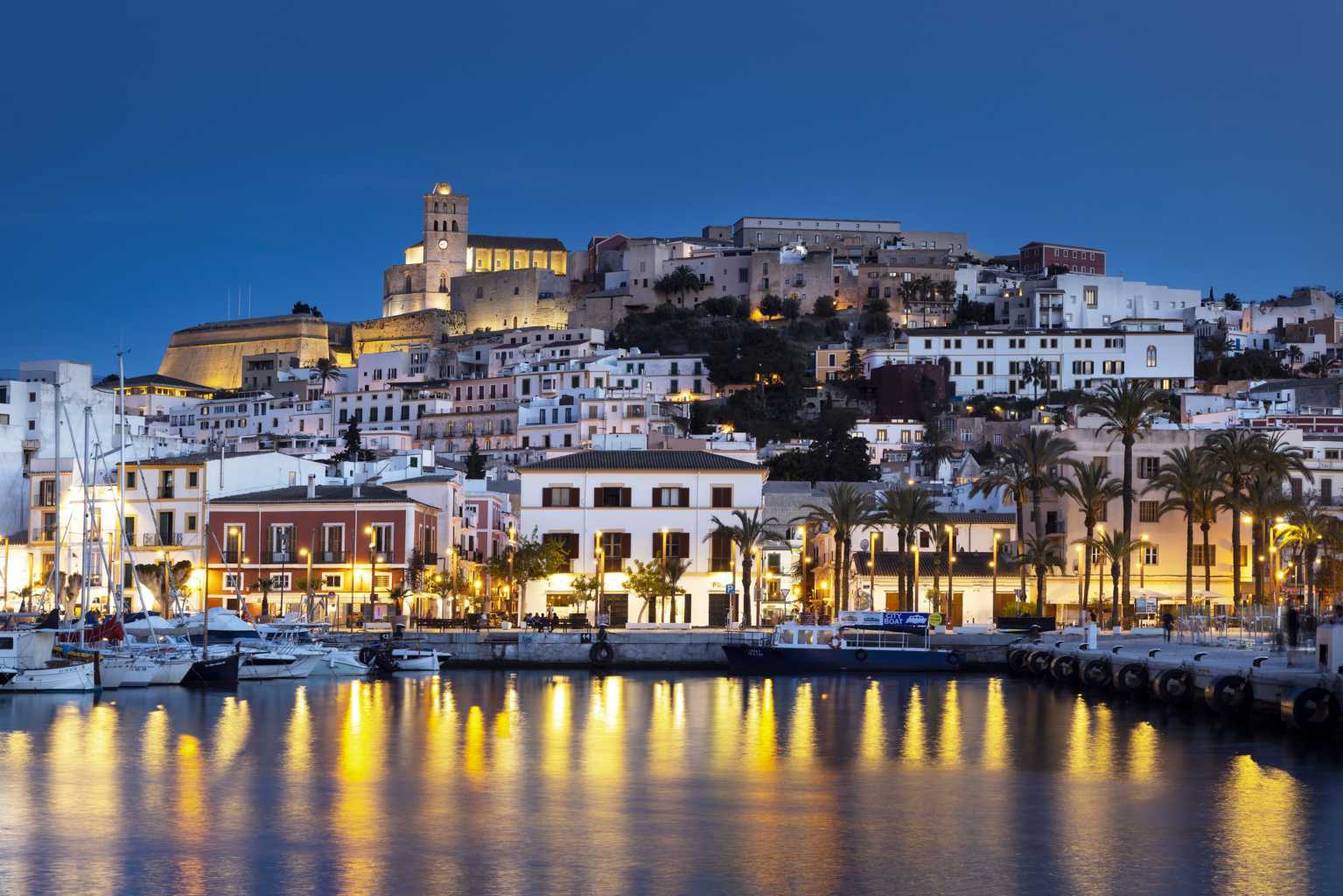
Head to Dalt Vila in the late afternoon, once the day-trippers have cleared out and explore the narrow, winding, cobbled streets on foot. Dalt Vila is over 2,500 years old and has changed hands more times than most countries with the Phoenicians, Romans, Moors, Catalans all making claim at some time throughout history. If you want to learn more about the history and local stories, consider joining one of the free guided walking tours that are led by locals. There are hidden tunnels under the old town that most people walk straight past, so wander off the main route if you've got the time to get a little lost.
Puig des Molins, five minutes from Dalt Vila is where almost nobody bothers to go. There are almost 3,000 Phoenician tombs sitting underneath modern Ibiza Town and it's one of largest and best-preserved Phoenician-Punic necropolis in the western Mediterranean. The burial tombs sit across 5 hectares with some graves dating back to 7th century BC where thousands of ancient Ibizan residents were buried or cremated. Containing the world’s finest collection of Punic remains, the necropolis is one of the sites that led to Ibiza’s Old Town World Heritage status.
Head to Las Salinas at golden hour for the flamingos and a fraction of the crowd you'd get anywhere else on the island. The natural wetland reserves are famous for their flocks of wild Greater Flamingos who are drawn to these hypersaline lagoons to feed on the brine shrimp. It is the pigment from this shrimp that gives both the water and the birds their distinct pink hue. Hundreds of flamingos inhabit these salt flats, especially in the summer. The reserve features three observation posts, though bringing binoculars is recommended.
Sant Joan de Labritja, up in the north of the island is a quiet, rural area famous for its pine-covered landscapes and untouched coastlines. There are seven hiking routes through pine forest and old stone paths. The one from Sant Joan to Cala Xarraca ends at a cove with a natural mud bath and maybe three other people the entire way. The same patch of land also grows wine, which most visitors have no idea about, and the family-run vineyards do tastings for a fraction of what a glass costs you at a beach club.
THE LUX JOURNALS MUST DO
Take the slow ferry to Formentera. The slower pace gives you more time to sit on the deck to enjoy the stunning views and gets you into the relaxed mood of your destination. You can also bring a car or bike with you on the slow ferry to get around Formentera once you arrive. The island itself is overrun with wild rosemary, pine trees and wild vegetation, with white sandy beaches and sea so clear and blue you'll wonder why you ever booked the Caribbean. Rent a kayak and explore the island's hidden caves or opt for diving and snorkelling. The visibility here is unmatched thanks to the huge UNESCO-protected underwater posidonia seagrass fields which filter the water. Meanwhile on land, the relatively flat landscape is ideal for hiking and cycling over a network of than 100km+ of paths.