
BEAUTY
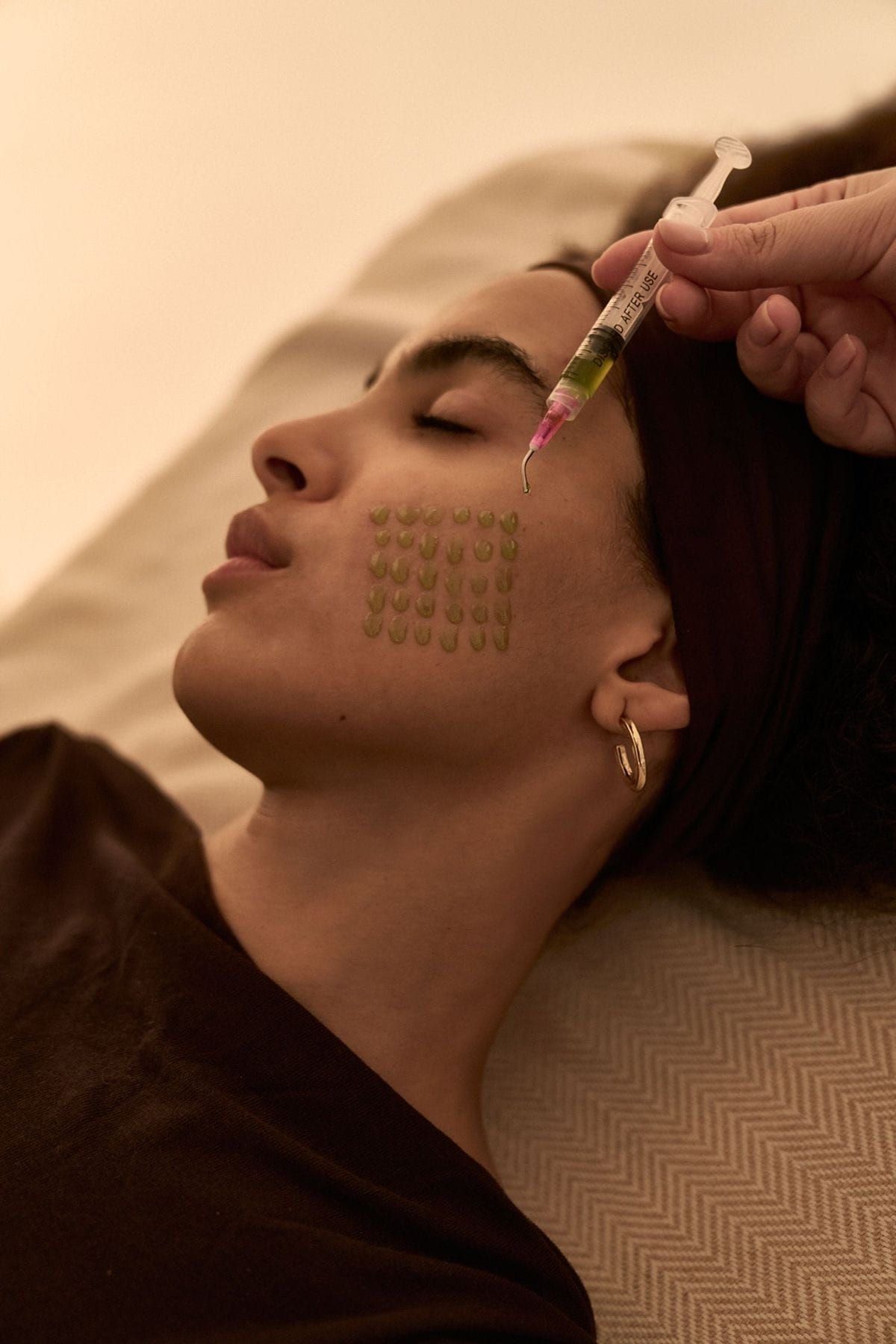
We're back with part 2 of your guide to the best in clinic beauty treatments that are actually worth spending on for your face and what ones really aren't worth your downtime. And of course we can't miss out on the beauty treatments worth it for body and hair so come back for part 3. If you missed part 1, you can read all the details on injectables and lasers here.
Skin Treatments That Are Worth It
Medical-Grade Chemical Peels
There's a huge gap between what's sold in spas and what's actually done in a medical setting. The basic principle is that a chemical peel applies an acid to the skin to cause controlled damage at a specific depth. The body then heals that damage by generating fresh skin meaning new collagen, new cells, better texture and more even tone. The more aggressive the peel, the deeper it goes, and the more dramatic (and more demanding) the result.
There are three tiers to chemical peels, superficial peels that work only on the outermost layer of skin. These currently are low to medium strength alpha-hydroxy acids such as 30–50% glycolic acid, 10–30% lactic acid, as well as salicylic acid. The goal is to treat epidermis level conditions whilst minimising recovery downtime. These are the type of peels you get in most spas. They give minimal downtime, mild improvement and are good for maintenance and glowy skin. They won't make a difference to deeper wrinkles or significant pigmentation.
Medium-depth peels are where things get a bit more meaningful. These penetrate through the epidermis into the upper dermis and are best for moderate wrinkles, acne scars, and pigmentation. Common agents include TCA at 25–35%, and Jessner's solution combined with TCA. TCA (trichloroacetic acid) is the workhorse of medical peels, it's been used for decades and has excellent evidence behind it. Downtime is real, you can expect 5 - 7 days of significant peeling and redness.
Then you have deep peels, which are are a different category entirely. Deep peels include TCA exceeding 50% and combinations of croton oil and phenol often specifically the Baker-Gordon formula. This is essentially the chemical equivalent of aggressive laser resurfacing. Clinical studies have shown that phenol peels achieved an average improvement of 75% in treating atrophic scarring and statistically significant reduction in wrinkle depth. The results can be extraordinary BUT cardiac monitoring should be accessible when employing phenol, as it carries a risk of cardiac complications. It must also be performed by a board-certified physician, often in a hospital or specialized surgical setting under sedation. If you really want to scare yourself, Google Phenol Peel images.
We Say - Peels done by medical professionals do improve texture, tone, pigmentation and stimulate collagen. But in our opinion only the Phenol peel comes close to devices like Morpheus8 or BBL and that comes A LOT of risks and honestly we really would never opt for it when there are much less risky treatments.
Hydrafacial (When Done Properly)
There's a lot of budget hydrafacials around, and if you're only looking for a cleansing facial then that's totally fine, crack on. But if you're looking for the real deal then read on as we'll explain what the fundamental differences are.
HydraFacial is a specific patented device and treatment protocol. It uses a unique vortex technology that simultaneously cleanses, exfoliates, extracts, and hydrates skin in a single pass. The machine uses a handheld wand with disposable tips that create a vortex effect - it swirls water and serums across the skin while vacuum suction removes impurities and dead skin cells. The three-step process is: cleanse + peel (using glycolic and salicylic acids), extract + hydrate (painless suction extraction), and fuse + protect (antioxidant serums infused into skin - where a lot of the amazing results come from and specific to the HydraFacial brand).
The others are generic hydrodermabrasion devices that mimic the concept - water-based exfoliation and extraction - but don't use HydraFacial's patented technology or serums. They use basic suction and water flow to cleanse and exfoliate, but the vortex technology that makes HydraFacial effective isn't there. The tips aren't single-use or as precisely engineered. The serums used are generic, not formulated specifically for the device. Results are hit-or-miss depending on the clinic, the device quality, and the person doing it. Some are decent for basic cleansing as we said but others might do very little.
We say - HydraFacials or cleansing facials are very worth it as a monthly maintenance treatment or before special events (but leave a few days for any redness to fade). These facials aren't anti-aging or corrective but they are excellent for overall skin health and immediate glowing results.
Microneedling with Radiofrequency (Morpheus8, Profound RF, Secret RF)
What can we say about microneedling with radiofrequency? Well, a lot actually. We absolutely love this treatment, especially when combined in a treatment plan with something like Sculptra.
This treatment combines two technologies: microneedling (tiny needles creating controlled micro-injuries in the skin) with radiofrequency energy (heat) delivered directly into the dermis through those needles.
The device penetrates the skin at specific depths, these are adjustable based on treatment area and skin concern. As the needles pierce the skin, radiofrequency energy is delivered directly into the deeper layers - the dermis and sometimes into the subdermal fat layer. No it won't melt the fat on your face as long as your practitioner keeps the RF settings below the temperature threshold that causes fat cell destruction. The device allows precise control over both depth and intensity. This is exactly why choosing a reputable clinic with experienced practitioners matters.
The RF energy heats the tissue to precise temperatures (typically below 43-47°C for skin tightening), which causes immediate collagen contraction and triggers the body's wound-healing response. This stimulates new collagen and elastin production over the following weeks and months.
The results are some immediate tightening from collagen contraction but you'll need to wait for the full results to develop over 3-6 months as new collagen forms. One treatment can give some improvement, but 2-3 sessions spaced 4-6 weeks apart are usually recommended for best results.
We Say - This is non-surgical skin tightening and rejuvenation that actually works unlike many other treatments, facials and serums (which aren't much more than good marketing). It's more effective than microneedling alone because the RF energy can penetrate deeper and create more significant collagen remodeling. And it's obviously less invasive than surgical options but delivers considerable improvement.
Skin Treatments That Are Not Worth It
LED Light Therapy (In-Clinic)
LED therapy uses specific wavelengths of light to penetrate the skin at different depths, triggering various cellular responses. Red light stimulates collagen production, reduces inflammation, and promotes healing. Blue light kills acne-causing bacteria. Near-infrared light penetrates deeper for wound healing and pain reduction.
The science behind LED therapy is solid. Studies have shown that consistent use can improve fine lines, reduce acne, speed healing, and improve overall skin texture. It's non-invasive, painless, and has no downtime. Our problem is that in-clinic LED treatments are massively overpriced for what they deliver. A single session typically costs $50-150 and you need multiple sessions per week for several weeks to see results, then ongoing maintenance. Clinic menus will often include LED as an add on treatment after facials, essentially charging you extra for what amounts to the same skin effects as 10-20 minutes under a light.
At home LED devices deliver the exact same wavelengths at the same intensity as in clinic devices. The technology isn't proprietary or particularly complex. A quality at-home LED mask costs $200-400 and can be used unlimited times. After 3-4 clinic sessions, you've already paid for a device you can use at home whenever you want. The CurrentBody LED mask, the Dr. Dennis Gross DRx SpectraLite, and Omnilux masks all use medical-grade LEDs with clinically proven wavelengths. You get the same photobiomodulation effect at home that you'd get in a clinic. Buy your own device, use it 3-4 times per week while watching TV or doing other things, and you'll get better cumulative results than sporadic expensive clinic sessions.
Oxygen Facials
Oxygen facials spray pressurized oxygen mixed with serums onto the skin. The claim is that oxygen delivery improves cell function, boosts collagen, and creates immediate plumpness and glow. The reality is your skin gets oxygen from your bloodstream, not from topical application. The stratum corneum (outer skin layer) is designed to be a barrier meaning oxygen molecules from the air or a facial don't penetrate to living cells in any meaningful way. Any immediate plumpness is from hydration and the pressure of the spray pushing serums into the skin, not from oxygen itself and the glow is temporary and fades within hours.