
BEAUTY
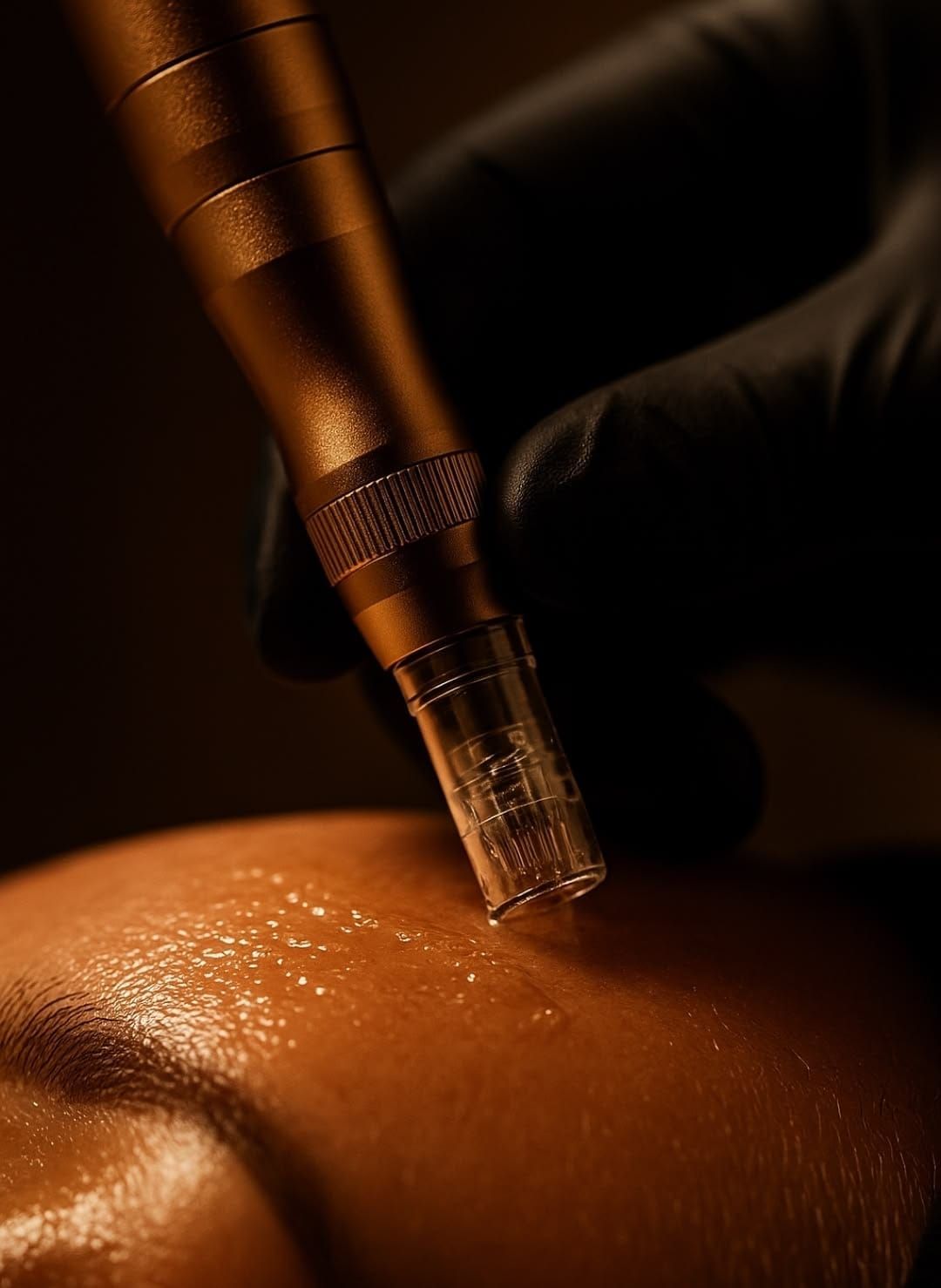
Truth time, we're aesthetic addicts. You can call us experts if you're being kind or call us guinea pigs if you're being honest. Either way, in the name of beauty and aging like Peter Pan, we've tried most of the talked about professional skin treatments or if we haven't tried it yet, we're planning to in the near future. We've done our research and we know what works, what doesn't and what's only worth it if money means nothing. Here's your guide to the best in clinic beauty treatments that are actually worth spending on for face, body and hair and what ones really aren't worth your downtime.
Injectables That Are Worth It
Sculptra, Radiesse, and Salmon DNA
Fillers are on the way out and biostimulators are very much in. These three work differently to each other but they all stimulate your body to build collegen rather than just filling the area or worse, giving you the dreaded pillowface.
Sculptra is an FDA-approved injectable biostimulator containing poly-L-lactic acid (PLLA) that stimulates natural collagen production to gradually reverse wrinkles, sagging, and volume loss. Unlike fillers, it restores skin foundation over time, with results often lasting up to 2-3 years. Ideal for cheeks, temples, and jawlines, it offers a natural, lifted, "liquid facelift" effect. It take a few sessions and a few months for the results to kick in but once they do, you'll see why its so popular.
Radiesse is a calcium hydroxylapatite-based biostimulator that provides immediate volume correction while stimulating long-term collagen and elastin production. The CaHA microspheres create a scaffold that encourages your body to build new collagen, so while the carrier gel is absorbed within months, the structural improvement remains. Results last 12-18 months and it's particularly effective for hands, jawline contouring, and areas requiring both lift and skin quality improvement.
Salmon DNA (polynucleotides) is a bio-remodeling treatment that repairs and regenerates tissue at a cellular level by improving skin hydration, elasticity, and texture. Extracted from salmon sperm DNA, polynucleotides promote fibroblast activity, reduce inflammation, and accelerate tissue repair. It's not volumizing - it improves actual skin quality. Multiple sessions are typically needed, with results building cumulatively over time.
We say - Worth it, these treatments rebuild your skin's structure from within. You're investing in collagen production, tissue regeneration and long-term improvement - not just temporary volume that degrades in six months or heavy product sitting in your face. The results are gradual, natural and actually anti-aging rather than just masking it.
Traditional Fillers - Depends
Hyaluronic acid fillers (Juvederm, Restylane, etc.) give volume to lips, cheeks, jaw, chin, temple, under-eyes, nasolabial folds and marionette lines. Fillers can be worth it but only when done well by an experienced injector who understands facial anatomy and restraint. It's really not worth it when filler is overdone, poorly placed or at a discount price (your health is really not worth discount injectables of any type).
Injectables That Are Not Worth It
Mesotherapy
Mesotherapy is an injections of vitamins, minerals, amino acids into the skin designed for rejuvenation. There is minimal evidence it works and reviews are negligible. You're paying for lots of injections with little evidential benefit.
Traditional mesotherapy still has a clear edge for hair loss and cellulite reduction but for facial anti-ageing specifically, Profhilo + PDRN is doing the same job but better.
We say - If your clinic is pushing a "vitamin mesotherapy facial" as a serious anti-ageing treatment, we'd be sceptical. If they're offering it as part of a broader skin booster protocol that includes HA or PDRN, that's something worth exploring.
Lasers Treatments That Are Worth It
Fractional CO2 or Erbium Laser Resurfacing
Both are ablative lasers, meaning they physically remove layers of skin rather than leaving the surface intact like non-ablative treatments (like IPL or RF). But that's really where the similarity ends.
The main difference between the two are depth and heat. Fractional erbium lasers operate at a wavelength of 2940nm and primarily target water within the skin, making them highly effective for superficial resurfacing. Fractional CO2 lasers operate at 10,600nm, targeting both water and collagen in the skin, which makes them effective for deeper resurfacing and more severe skin conditions.
That wavelength difference matters enormously in practice. Erbium lasers are known for their precision in targeting water molecules, resulting in controlled tissue ablation with minimal damage to surrounding tissue. CO2 produces more thermal damage to surrounding tissues, which is actually why it works so well for collagen remodelling, but also why it requires more recovery.
We say - There's a reason you've been seeing all your go to skincare gurus buzzing from CO2 lasers. CO2 is the heavier hitter out of the two. When addressing fine lines and wrinkles, fractional CO2 lasers often provide more dramatic improvements due to their deep penetration and robust thermal effect, which stimulates substantial collagen remodelling. For deep wrinkles, significant skin laxity, or pronounced ageing, CO2 typically delivers more dramatic and longer-lasting results in fewer sessions. Studies also prove that the effects of collagen stimulation last longer in fractional CO2.
Picosecond or Q-Switched Lasers
These target pigmentation, age spots, melasma and are used for tattoo removal, breaking up pigment without damaging surrounding tissue.
The difference here is how they destroy pigment, both lasers target melanin, but they go about it differently. Q-switched lasers work in nanoseconds and rely primarily on photothermal action, i.e using heat to break down pigment. Picosecond lasers work roughly 100x faster and rely on photoacoustic action, which is delivering energy so rapidly it creates a mechanical shockwave that physically shatters pigment without generating significant heat. That difference in particle size matters enormously for clearance, smaller fragments get cleared by the body faster and more completely.
Don't write off Q-switched lasers though. Low-fluence Q-switched Nd:YAG 1064nm laser is the most widely studied laser for melasma and ranked top in efficacy in a systematic review and analysis of 59 randomised controlled trials. It has decades of evidence behind it and remains a workhorse for pigmentation, particularly in experienced hands.
We Say - We've used Q-switched lasers for tattoo removal and whilst it's probably the most painful treatment that we've ever done, its outstanding. Multiple sessions are needed but results are truly excellent.
IPL (Intense Pulsed Light) and BBL (BroadBand Light)
IPL actually isn't a laser at all, which most people don't realise. Its a high-intensity light source that emits non-coherent and polychromic light in the broad wavelength range of 515–1200nm. Which sounds very technical but it's actually pretty simple once you break it down. IPL fires scattered, multi-coloured light across a wide range at once, like a floodlight whereas a laser fires one precise beam of one colour.
Because it covers multiple targets simultaneously, IPL can treat pigmentation, redness, and broken capillaries in one pass. But that lack of precision is also why it's riskier on darker skin tones.
BBL is the upgraded version that's definitely worth knowing about and probably one you've seen talked about a lot. BBL is technically still IPL but meaningfully different in clinical outcomes. BBL uses the world's most powerful IPL and is also the only treatment capable of functionally changing the expression of genes in aged skin cells, as proved by a Stanford University study, making it powerful enough to reverse signs of ageing as well as targeting rosacea, acne, and brown age spots. That Stanford gene expression study is particularly notable because it's one of the more compelling pieces of evidence for any aesthetic treatment. It showed BBL treated skin at a molecular level resembled younger skin.
We Say - IPL/BBL earns its place as a maintenance treatment and an overall photorejuvenation tool, especially for lighter skin tones dealing with diffuse sun damage. It's not a precision instrument and it's not what you'd use for stubborn melasma or deep pigmentation. For countries where sun exposure is relentless and year-round, BBL done regularly (3–4x per year) makes a lot of sense as a skin preservation strategy.
Lasers That Are Not Worth It
Low-Level Laser "Rejuvenation"
Or better know as LED therapy they're essentially the same concept, just with LED panels instead of a laser device. Red light therapy panels people use at home are a consumer version of the same principle. And whilst there are some reports of consistent use of home LED masks giving some results, the truth is they will never replace anything that we've listed above.
So back to what it is, LLLT uses very low-powered red or near-infrared light, not to create controlled damage or ablate anything, but purely to stimulate cells. The light is absorbed by your cells' energy centres (mitochondria), which wakes them up and tells them to produce more energy, repair themselves, and make more collagen. It's the complete opposite end of the spectrum from CO2 resurfacing.
Come back for Part 2 which includes medical grade chemical peels, radio frequency, plus the body and hair treatments that we've tried and tested.