

Before you roll your eyes at another article telling you that you can prevent botox with tape and stop sagging skin with face yoga, just know that this article isn't that. We're BIG advocates of in clinic treatments, always on the lookout for new injectables and maybe, just maybe a tiny bit addicted to Sculptra. So don't think we're going to try and make you believe that you can fully replace clinic treatments for the same results. But what we do believe is that there are a number of things you could, and should, be doing at home to keep your skin in the best shape possible.
So here's what's worth doing at home - a mix of DIY treatments, tools that are worth the investment, and skincare that really works.
DIY Treatments
These are the simple things you can make yourself that give real results without needing fancy ingredients or complicated steps.
Coffee Grounds Body Scrub
Take your used coffee grounds and mix them with organic coconut oil. Contributing to a no wastage kitchen and this scrub leaves your skin buffed, smooth and soft.
The coffee grounds exfoliate and boosts circulation and the coconut oil keeps everything hydrated. Use it in the shower 2-3 times a week on your whole body or just anywhere that gets dry or rough - elbows, knees, legs. Just don't use it on your face, it's too abrasive for the delicate thinner skin.We make it from 2 days of coffee grounds from the drip machine with 2 tablespoons of coconut oil, but you can alter the amounts if you wish.
Ice Face Dunk
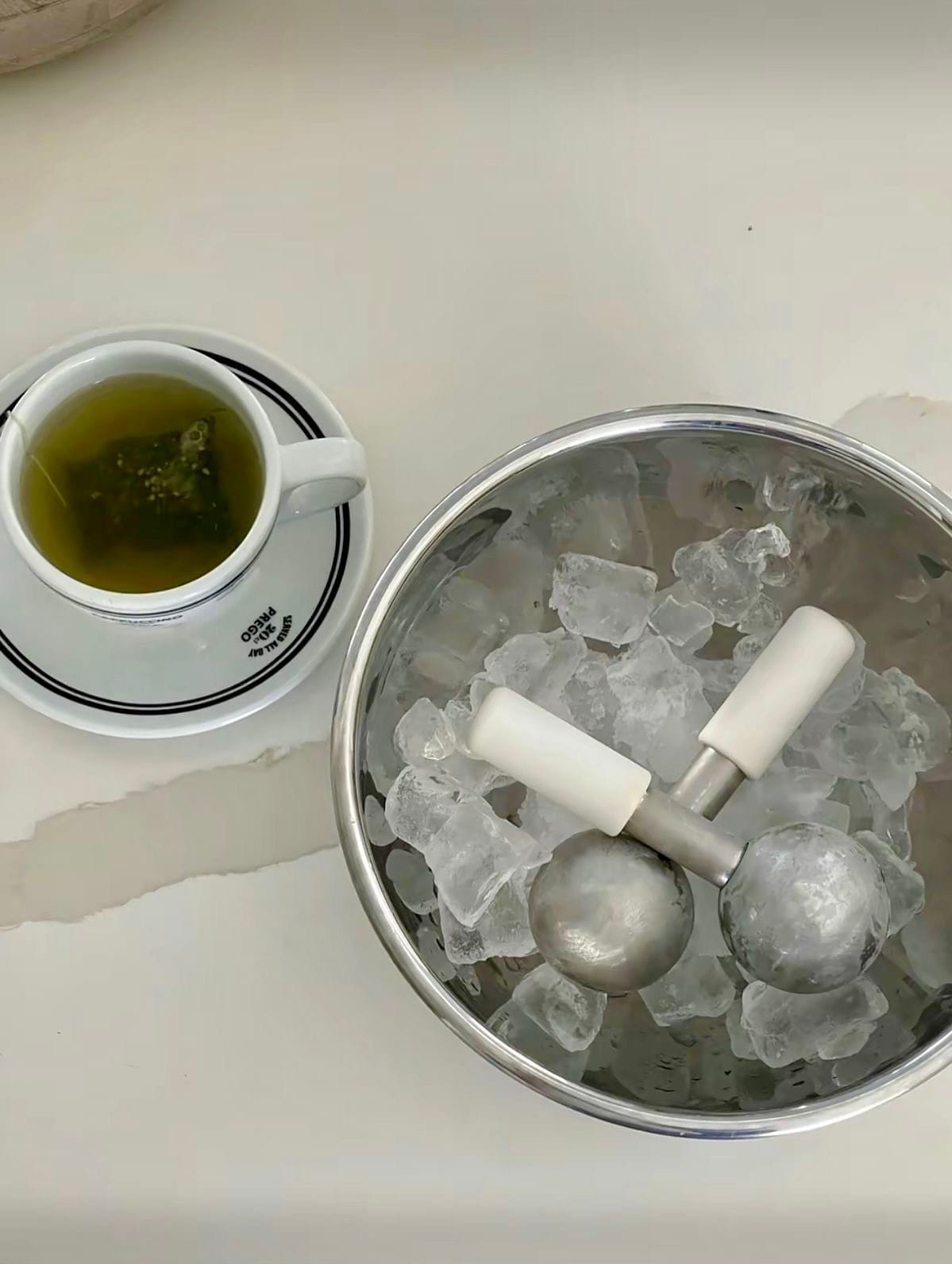
One of our go to morning skincare steps. Fill a large bowl with ice and water while you wash your face with your usual cleanser. Once the water temperature is icy, it's time to dunk. Submerge your face for 10 seconds and repeat 6 times with short breaks in between. Hold your breath, obviously, and if you don't like the sensation of water up your nose, use a swimmers nose clip. It's a simple step but one that will give amazing results, reduce puffiness, tighten skin, and calm inflammation.
Do this in the morning for depuffing or after a long day when your face feels tired and swollen. Costs nothing, takes five minutes, and the results are immediate.
Tools Worth The Investment
Not every beauty device is worth buying, but these ones are. They give real results if you use them consistently, and they're what you'll reach for between professional treatments.
Current Body LED Face Mask
If you're only going to buy one at-home device, this is the one. Red light stimulates collagen production and helps with anti-aging, near-infrared penetrates deeper for skin renewal and wrinkle reduction. The science is solid and you'll see visible results in about 4 weeks if you're consistent that will continue to improve.
Use it for 10 minutes a day, 3-5 times a week, on clean product-free skin. Certain skincare and makeup can block the LED light from penetrating properly, so use it before you apply anything else. The device is completely pain-free, doesn't generate heat, and shouldn't feel uncomfortable at all. Good masks aren't cheap but they last for years and you're getting professional-level light therapy whenever you want it without booking appointments or leaving your house.
Microcurrent Device
Microcurrent devices like Ziip or NuFace tone and lift your face using low-level electrical currents that work your facial muscles. Think of it as a face workout.
They work, not as dramatically as in-clinic treatments, but enough that you'll notice tighter skin, more defined jawline, lifted cheekbones. The catch is you need to use it regularly, ideally every day. If you're the type to buy beauty devices and then forget about them, skip this one. But if you'll commit, it's worth it.
Gua Sha
A Gua Sha can cost from a couple of dollars up to a couple of hundred depending on the material its made from. But it is one of the biggest return on investment tools you can buy if you use it regularly. Our favourite is this very cost effective one, and its best used with serums or oils that allow it to glide across the skin and not drag it.
It drains lymphatic fluid, reduces puffiness, sculpts your face, and improves circulation. Work in upward and outward motions, with a focus on jawline, cheekbones, and under-eyes. Morning to depuff or evening as part of your wind-down, either works. Make sure you're using enough pressure to move fluid but not pressing so hard its pulling your skin.
Dry Brushing
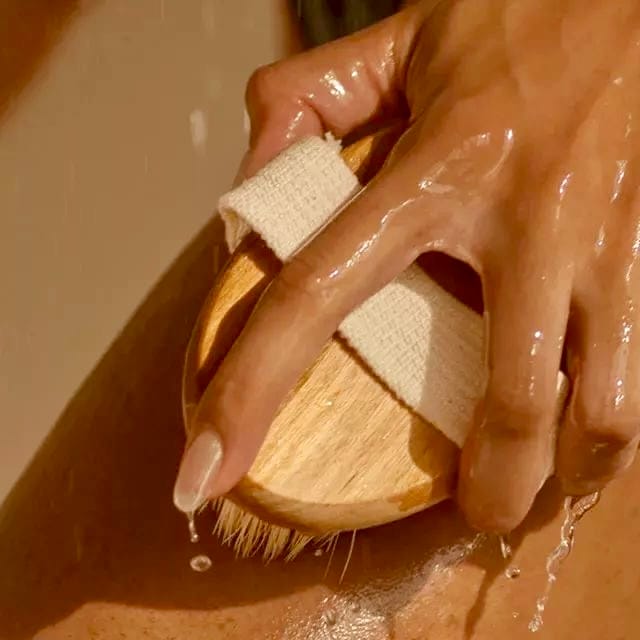
Dry brushing before your shower exfoliates dead skin, stimulates lymphatic drainage, boosts circulation, and makes your skin ridiculously soft.
Get a natural bristle brush, always brush towards your heart, start at your feet and work upwards. Takes three minutes and the difference in how smooth your skin feels is immediate.
Every day is ideal because habits help you stick at things but if its too much for you or you have sensitive skin then 3-4 times a week is plenty. You'll see smoother skin, softer texture, and less water retention if that's something you deal with.
Skincare Treatments At Home
These are the skincare treatments that you can build into your weekly routine, they are simple but great for that extra glow.
Chemical Exfoliation
You don't need professional peels to get the benefits of chemical exfoliation. At-home products with glycolic acid, lactic acid, or salicylic acid work brilliantly. Start a once a week and build up to the recommended application for the brand you are using. You'll see better texture, tone, brightness, smaller pores, all the good stuff. The Ordinary, Paula's Choice, Drunk Elephant all make solid options at different blends and percentages.
Retinol
Retinol is one of the most effective anti-aging treatments you can do at home. It speeds up cell turnover, builds collagen, reduces fine lines, evens skin tone. You need to use it consistently and correctly though. Start with a low percentage, use it at night only, and always wear SPF during the day because it makes your skin sun-sensitive. Takes a few months to see results but it's one of those things that's non-negotiable if you're serious about your skin long-term.
Face Shaving (Dermaplaning)
This removes the top layer of dead skin cells and peach fuzz from your face, skincare absorbs better, makeup sits better, and skin looks so much smoother. You can do this two ways: with a regular razor or with a dermaplaning tool. Both work, they're just slightly different approaches.
With a Regular Razor: Use a clean, sharp razor (facial razors or even men's razors work). Apply a layer of oil or shaving cream to clean skin so the razor glides smoothly. Shave in short, gentle strokes in the direction of hair growth. Rinse, pat dry, follow with moisturizer and SPF.
This is the easier option and works perfectly fine for regular maintenance. Do it weekly or whenever you feel like your skin needs it.
With Dermaplaning Tools: Dermaplaning uses single-use sterile blades specifically designed for facial use. These are sharper and more precise than regular razors. Use them on clean, dry skin (no oil or cream needed). Hold your skin taut and use short gentle strokes at a 45-degree angle. Don't press hard, let the blade do the work.
Dermaplaning gives a deeper exfoliation and removes more dead skin than a regular razor. Do it every 3-4 weeks to give your skin time to regenerate between sessions.
Don't do either of these if you have active breakouts or inflamed acne because you'll spread bacteria. And always follow with SPF after because you've just removed a protective layer of skin.
Body Treatments
Our face isn't the only thing that deserves attention, here's what we love to keep our body skin as good as our face.
Cellulite Massage
Regular cellulite massage with a massage tool helps break down fat deposits, improve circulation, and smooth the appearance of dimpled skin. It's not a permanent fix but done consistently it makes a visible difference.
Use a dry brush, massage cups, or a tool designed for cellulite. If you're using a tool then you'll want some sort of oil or serum to allow the tool to glide. Work in circular motions and upward strokes on areas where you have cellulite - thighs, bum, backs of legs. Apply firm pressure, you want to really work the tissue, not just glide over the surface.
Do this 3-4 times a week for 5-10 minutes per area. You'll see smoother skin, less visible dimpling, and better overall texture over time.
Sauna Sessions
If you have access to a sauna, the you'll definitely want to use it. Regular sauna sessions flush toxins, improve circulation, boost collagen production, and give you that glowing, tight skin look. Infrared saunas are particularly good for skin because they penetrate deeper and work at a lower temperature than traditional saunas. 20-30 minutes, 3-4 times a week if you can.
After a sauna session your skin will be softer, clearer, and you'll see a temporary tightening effect. Long-term, regular sauna use improves skin elasticity and overall appearance.
Skincare for the Body
Your body needs more than just moisturizer, especially if you care about texture, tone, and aging skin below your neck.
Body Exfoliants with AHAs/BHAs: Chemical exfoliants aren't just for your face. Body lotions with glycolic acid, lactic acid, or salicylic acid smooth rough texture, fade dark spots, improve tone, and help with keratosis pilaris (those bumpy arms and legs).
Use them 3-4 times a week after showering. You'll see smoother, more even skin within a few weeks. Brands like Ameliorate, CeraVe, and The Ordinary make good affordable options.
Retinol for Body: Yes, you can use retinol on your body and you absolutely should. Neck, chest, hands, anywhere you're seeing signs of aging or sun damage. It works the same way it does on your face - increases cell turnover, builds collagen, fades pigmentation.
Use it at night, start slow, and always follow with SPF during the day on any areas you've applied it to.
Vitamin C Body Serums: Vitamin C brightens, evens tone, and protects against environmental damage. Body serums or oils with vitamin C work brilliantly on chest, arms, legs, anywhere you want brighter, more even skin.
Apply after showering while your skin is still slightly damp so it absorbs better.
The point is, if you're doing all this work on your face, don't neglect your body. The same active ingredients that work on your face work below your neck too.
The Lifestyle Bit
All the treatments and devices in the world won't fix bad lifestyle habits. You know this already but it's worth saying anyway.
If you're only getting 5 hours of sleep, your skin is going to look tired and dull. Sleep is when your body repairs itself, builds collagen, processes everything. You need 7-8 hours minimum for your skin to look its best.
If your diet is terrible, your skin will show it. Protein builds collagen, healthy fats support your skin barrier, antioxidants fight aging, water keeps you hydrated. Skincare can't fix a diet full of processed food and sugar.
If you're not moving your body, your circulation suffers, lymphatic drainage slows down, you retain water, your skin looks worse. You don't need to train like an athlete but regular movement makes a visible difference. Even just daily walks help.
The at-home treatments work better when your foundation is solid. Sleep properly, eat well, move your body. Then layer the treatments and professional work on top. That's how you get results.
What You Can and Can't Do at Home
At-home treatments are brilliant for maintenance, consistency, and keeping your skin in good shape between professional appointments. But some things need a professional and you shouldn't try to DIY them.
Deep chemical peels, laser treatments, injectables, medical-grade facials - these need expertise and equipment you don't have at home. They're more intensive, deliver bigger results, and shouldn't be attempted in your bathroom. At-home is your daily and weekly maintenance. Professional treatments are your quarterly or biannual upgrades. You need both working together to reach those skin care goals you set for yourself this year.